
Home / How it works
How the bedside toilet chair works Go beneath the upholstery.
The support beside the bed, the system inside, the design in 3D, servicing and the path for air. Everything on this page comes from the same R7.17 development CAD assembly.
A steady handhold.
Before the first step.
A fixed floor-to-ceiling pole sits between the bed and chair, to the person’s left when seated on the bed. Its U-shaped grab handle swivels toward the chair for the transfer, then turns toward the bed for the return.
Safer nights / A short conversation about planning before a fall. AI-generated presenters; the chair is in development.
Planning for nights at home now? Read our guide to safer night-time toilet trips: lighting, grab bars, commodes and who can help.
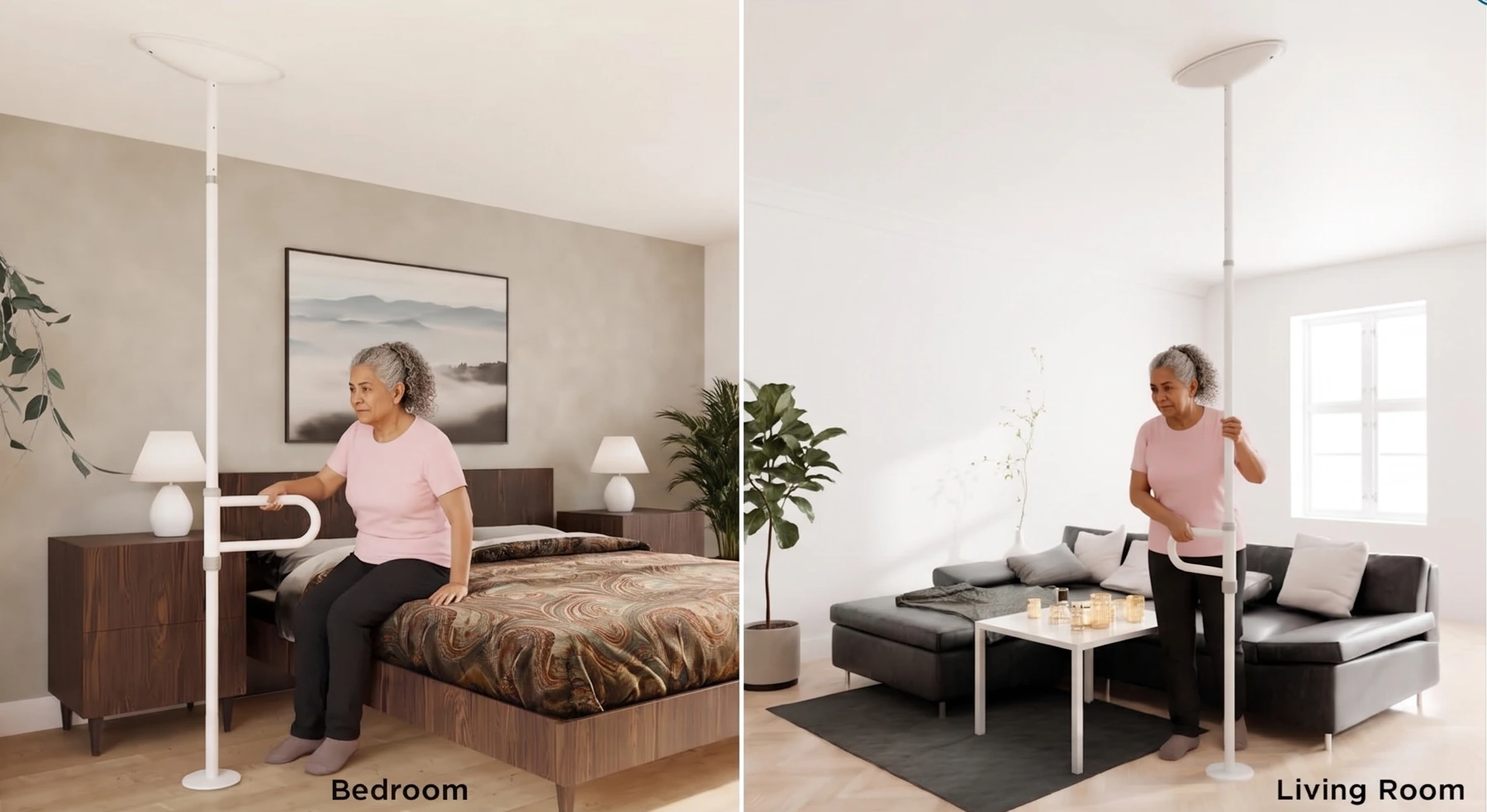
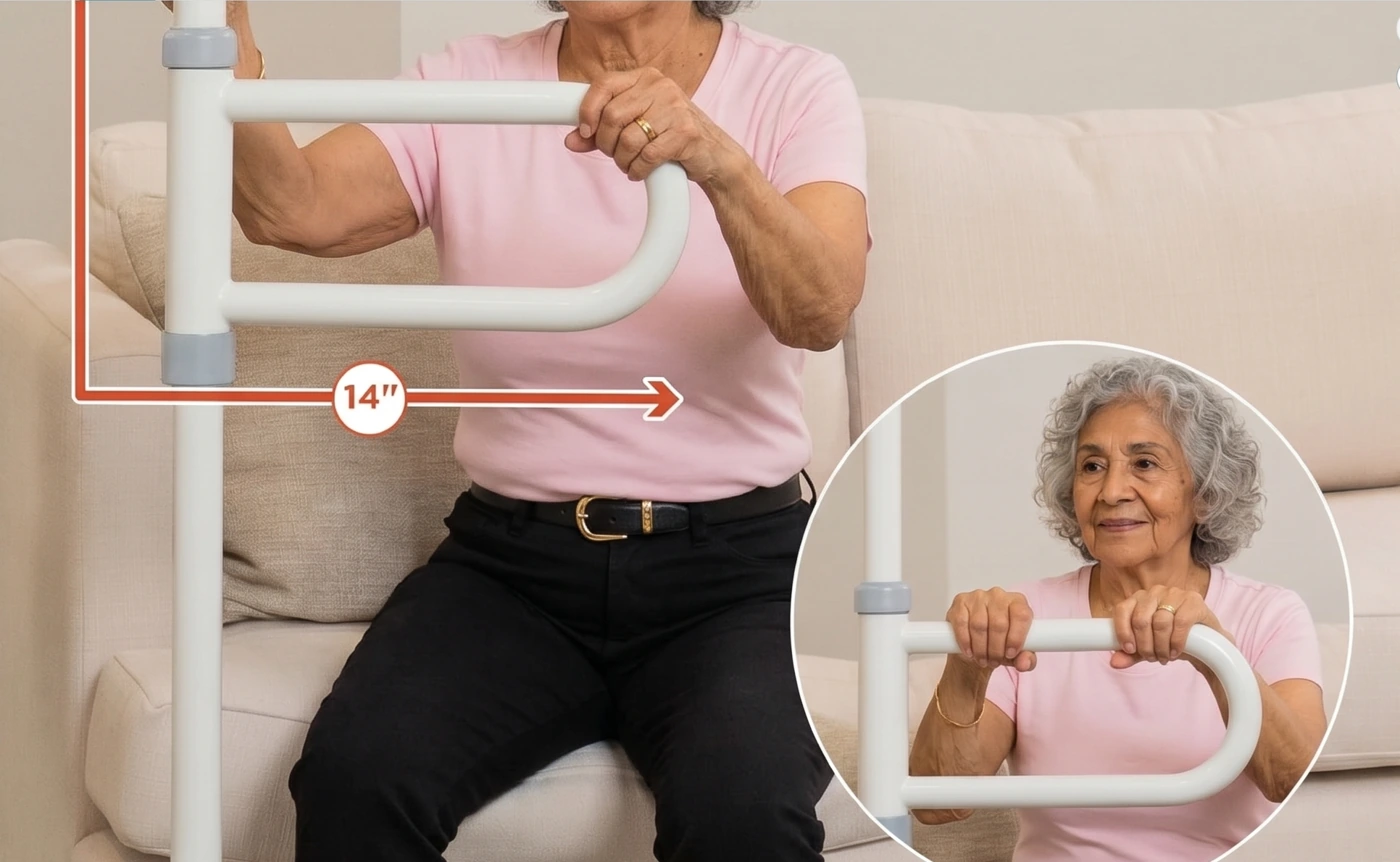
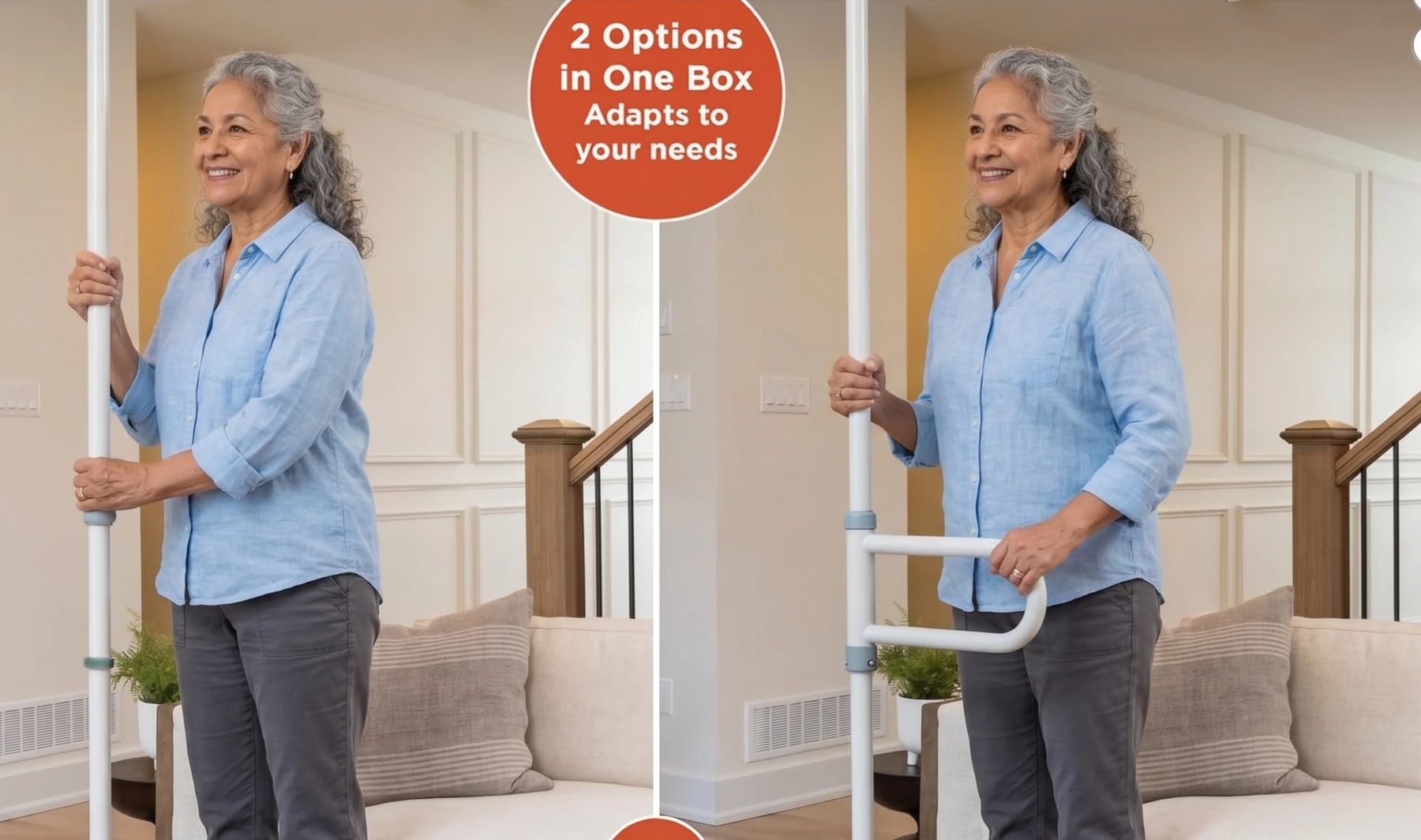
User-supplied accessory references, not photographs of the Dignify Life prototype or confirmed included equipment. Pole selection, anchoring surfaces, installation, load rating and clear transfer paths need assessment for the person and room. The vertical pole stays fixed. Only its grab handle swivels. Selection, rotation stops and any locking positions must follow the chosen accessory’s rated instructions.
A remote command from the bed.
The proposed handheld remote adds OPEN and CLOSE requests to proximity sensing and the two front switches. The controller must still check occupancy and obstructions: a close command must not close onto someone. Remote pairing, range, feedback and fault behavior remain to be engineered and tested.
Every movement
has a purpose.
Go beneath the upholstery. These short animations use the development CAD assembly so the parts stay the same from one view to the next.
01 / SENSE & OPEN
Two openings. One coordinated request.
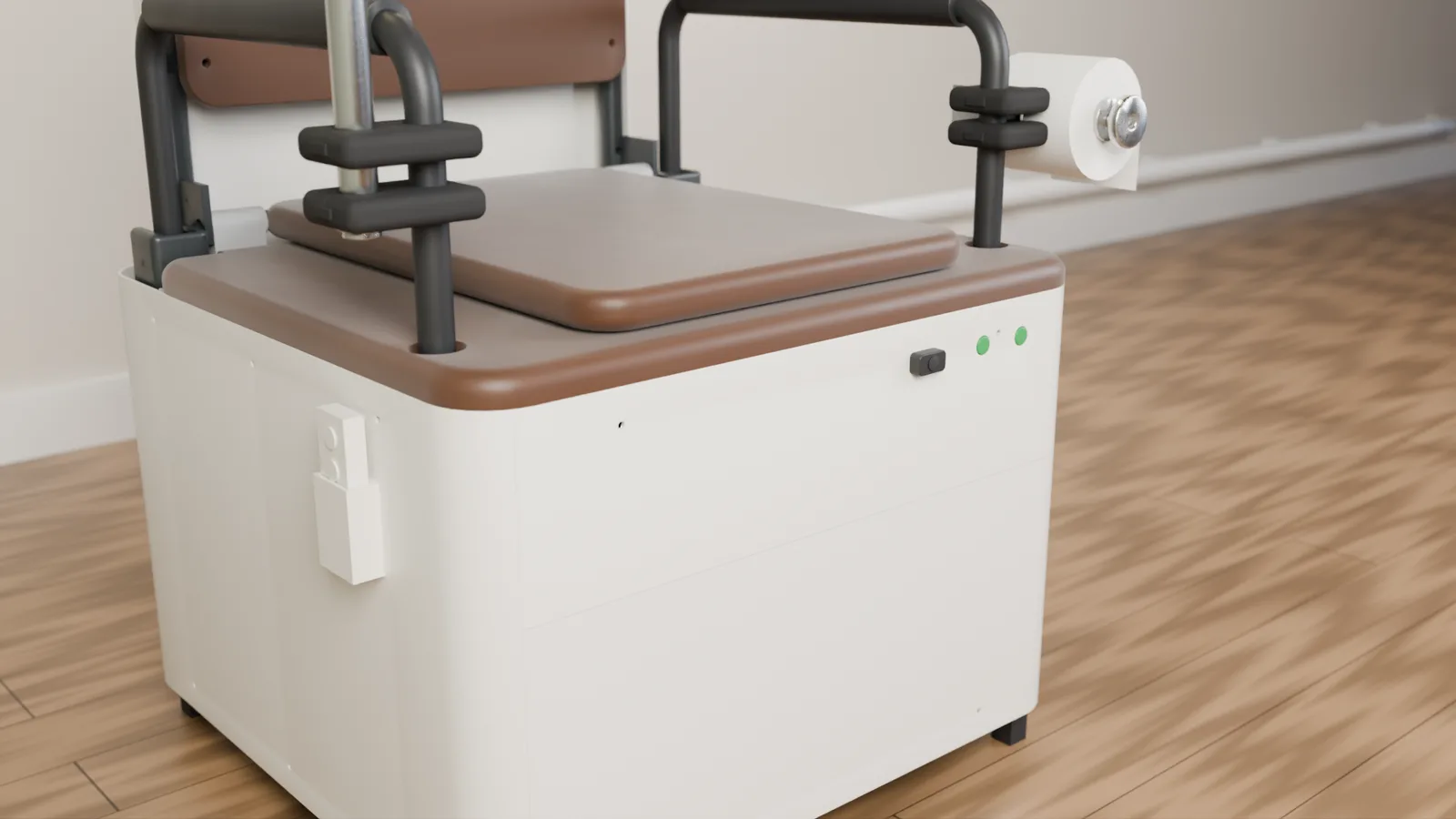
Approach sensing, a proposed bedside remote or the two front switches send a request to the controller. The padded top lid opens while the separate motorized shutter on the solids-bin lid opens with it.
The fixed seat and backrest stay in place. Occupancy is intended to hold the openings clear.
Request → Check → Move
Watch the complete chair story
Prescribed CAD motion, not a mechanism test. Liquid and solids are illustrative; coconut coir is shown as clean material. Air markers are explanatory. The cutaway is an analytical view, not an opening in the physical bin.
Turn it around.
Take a closer look.
The whole chair. The internal frame. The cassette, drive and ventilation. Ten interactive models, all from the same development assembly.

Choose a view, then enter the 3D design. If the view stays blank, choose “Use basic 3D”. Development model / 10 views
Front / Components separated for inspection
Rear / The same development assembly
These display models come from the R7.17 development CAD, including the continuous open-bottom liner guard that keeps the bag away from the stationary agitator. Materials are browser approximations of the specified finishes. The paper holder and staged room are separate appearance concepts. About the model files ↗
Built around
the practical things.
Separate collection. A supported drive. Serviceable assemblies. Explore what each part is intended to contribute.

A powder-coated metal frame.
The internal structure supports the seat, collection vessels, controller and motor mounts.

Motor mounted. Tyre in contact.
The frame carries the motor and spring-loaded rubber tyre. Two idler rollers on the far side hold the bin steady, so the tyre load cannot tilt it or unload the lid seal.

A place for toilet paper.
A clamp-mounted holder concept. Reach and transfer clearance are still to be checked.
Open. Close. A manual request.
Two front switches request opening and closing when a manual command is needed. They still depend on power and validated controller behavior.
Specified materials and visual finishes. Their hygiene, corrosion and odor performance must be verified in the assembled product. CAD materials are approximations; the paper-holder view is AI-generated.
A fresh bag.
A thoughtful reset.
The intended service uses the same gray bin. The bag is removed and replaced. The lid, shutter and motor leave with the cassette; no extra white container is added.
The intended reset
CAD illustration of the intended sequence, using clean demonstration materials. Bag geometry and coir motion are illustrative. Liner protection, seals, latch feedback and safe service isolation need physical development. Every few days or weekly is a servicing goal dependent on use and capacity. The urine vessel is emptied separately: it slides out at the front on its own tray when the level alarm sounds, about every four to five days for one adult.
Fresh thinking.
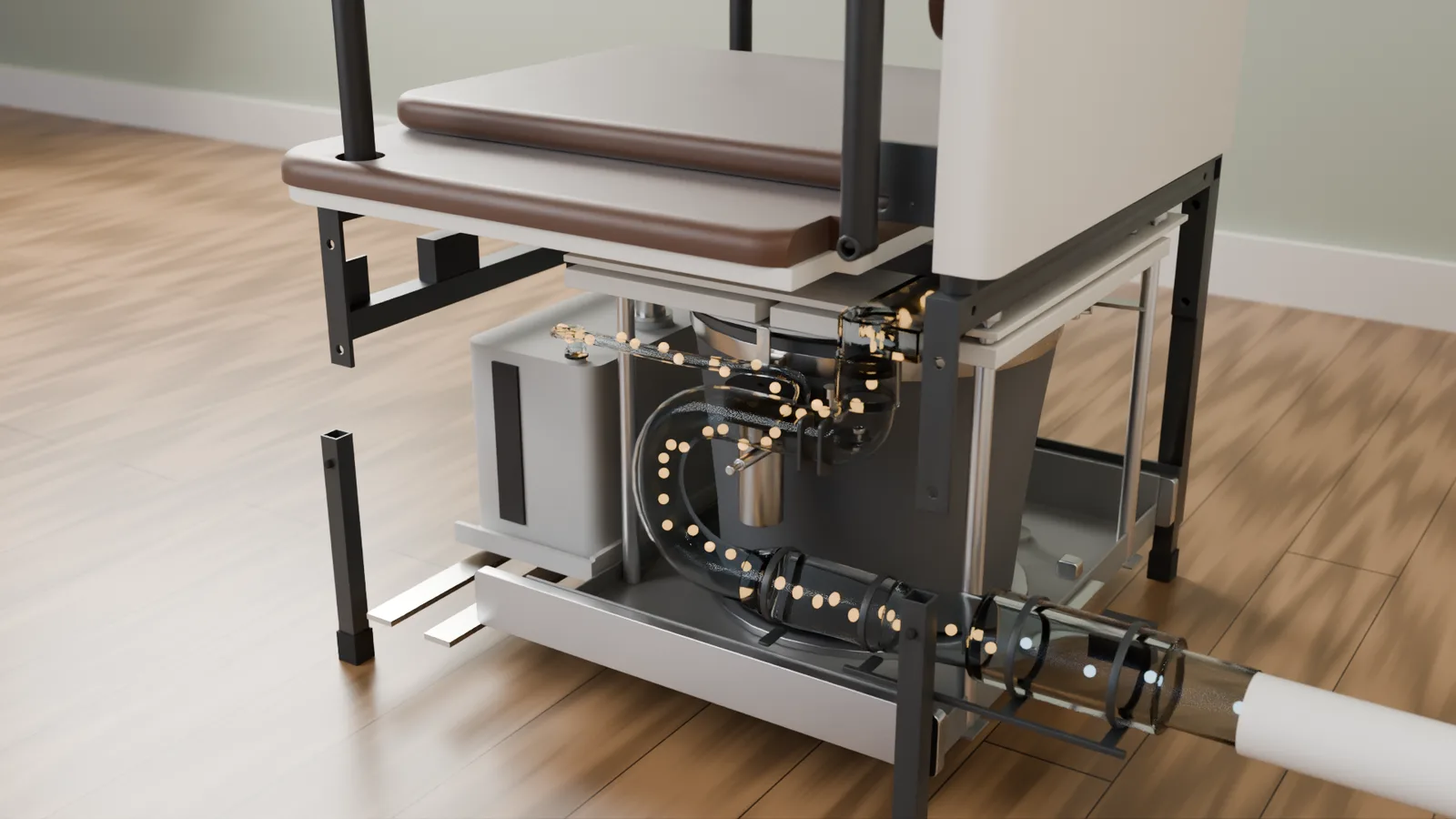
Continuous extraction.
The plan is a low-power fan running continuously, collecting air from both vessel headspaces. Air passes through the fan, then the filter and low rear outlet, into the outdoor duct.
The installation example has an approximately five-metre pipe run. Actual flow, power, noise, sealing and filter resistance must be measured together. An odor-free result is not established.
A specific purpose.
A considered combination.
Related solutions already exist. Our focus is bringing several ideas together in a bedside chair designed around the person and their care routine.
| Approach | What the supplier describes | Dignify Life’s proposed focus |
|---|---|---|
| Separett | Separate urine and solids, with ventilation and managed collection. | An upholstered bedside chair; proximity, proposed remote and front-switch lid commands; coordinated cassette shutter; frame-driven bin rotation; bag servicing; low rear extraction; optional phone access and consent-based presence sharing. Development design. This combination has not been established as exclusive. |
| HELIPOTT E-Drive | Urine separation and automatic mixing with coconut substrate. | |
| CompoCloset S1 | Urine separation and push-button sealing of solids in liners. | |
| Laveo DryFlush | Waterless waste sealing, marketed for bedside and aged-care applications. |
Related approaches, based on the linked supplier pages. Supplier pages reviewed 31 October 2026. This is a limited comparison of approaches, not an exhaustive market or patent search, endorsement, or proof that any product is suitable for a particular person.
Tell us what would help.
Reserve yours with a fully refundable $50 deposit, or book a call and ask us anything about the design.